
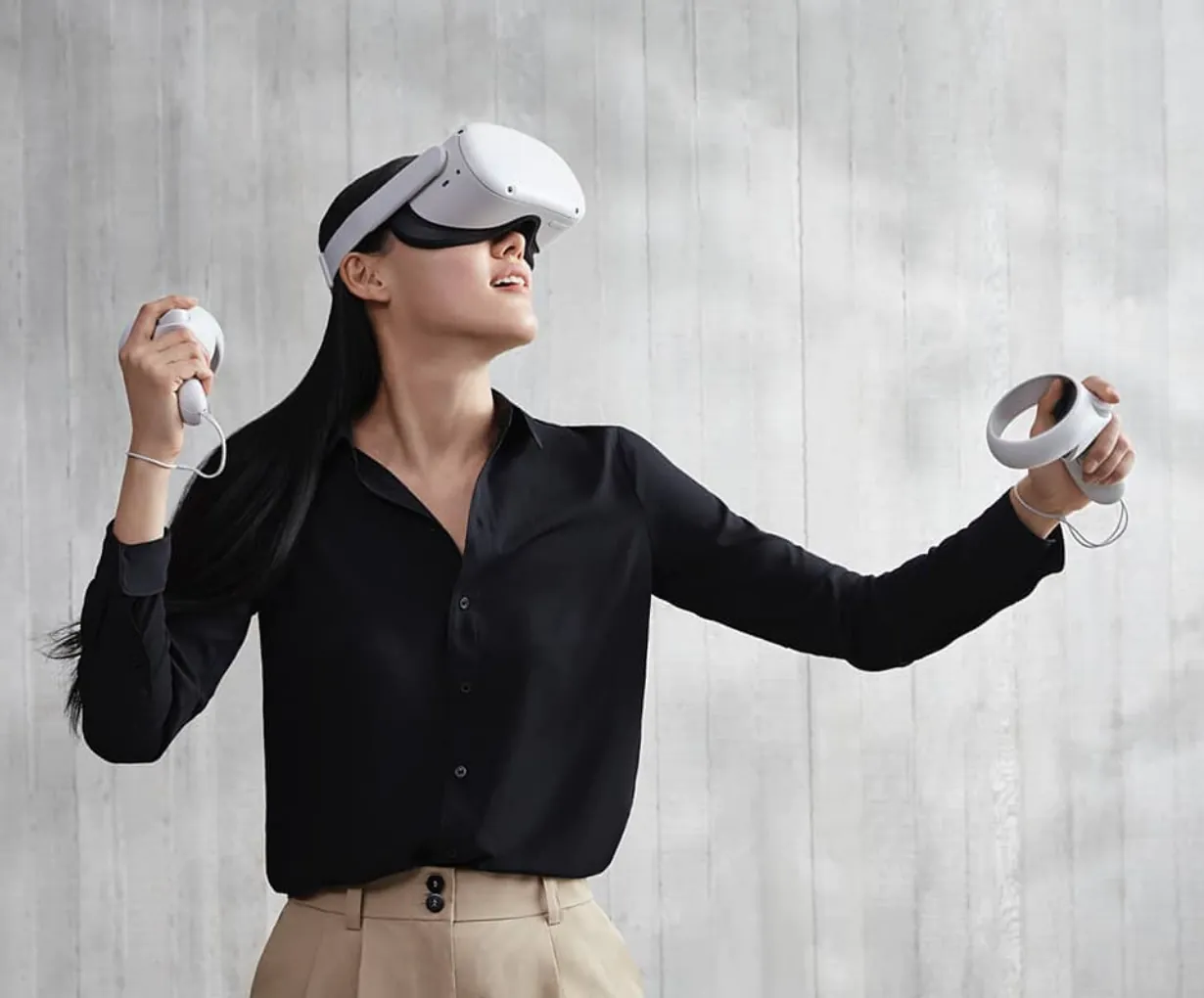

Virtual Reality, commonly called VR, is one of the most interesting technologies changing the way people interact with computers. Instead of looking at a normal screen, VR places the user inside a computer-generated environment where they can look around, move, interact with objects, and experience digital content in a more natural way.

VR is no longer limited to entertainment and video games. Today, it is being explored in education, healthcare, engineering, architecture, training, tourism, business, and many other fields.
What Is Virtual Reality?
Virtual Reality is a technology that creates a simulated three-dimensional environment using computers and specialized hardware.
A typical VR system uses a headset with displays and sensors. The headset tracks the user’s head movement and changes the view according to that movement.
For example, if you turn your head to the left in a VR environment, the virtual scene also changes to show what is located on the left side.
This creates a feeling of being present inside the digital environment.
How Does Virtual Reality Work?
VR combines several technologies to create an immersive experience.
1. VR Headset
The headset contains displays positioned in front of the user’s eyes. Each eye receives a slightly different image, which helps create the perception of depth.
2. Motion Tracking
Sensors track movements such as:
- Head rotation
- Head position
- Hand movement
- Controller movement
- Body movement
The system continuously updates the virtual environment according to these movements.
3. Controllers
VR controllers allow users to interact with objects in the virtual world.
Depending on the system, users can pick up objects, press virtual buttons, operate machines, or perform other actions.
4. Computer Processing
A computer or standalone headset processes the virtual environment and generates images in real time.
The system must respond quickly to movement. Delays between movement and visual response can reduce immersion and may cause discomfort.
Types of Virtual Reality
VR experiences can be broadly divided into several categories.
Fully Immersive VR
Fully immersive VR attempts to replace the user’s normal visual environment with a computer-generated world.
This is the type most people associate with modern VR headsets.
Semi-Immersive VR
Semi-immersive systems provide a strong sense of presence but may use large screens, projection systems, or specialized environments instead of completely surrounding the user.
These systems are often useful for professional training and simulation.
Non-Immersive Virtual Reality
Non-immersive systems display a virtual environment on a conventional computer screen.
The user can interact with the digital environment, but they do not feel completely surrounded by it.
Applications of Virtual Reality
The potential applications of VR are much broader than gaming.
Education
VR can make learning more interactive.
Instead of reading only about historical locations, students can explore virtual environments. Science students can examine three-dimensional models, while engineering students can study machines and structures virtually.
This can make difficult concepts easier to understand.
Healthcare
VR is being explored for medical education, simulation, rehabilitation, and other healthcare applications.
Medical students can practice procedures in simulated environments without immediately working with real patients.
VR can also provide controlled environments for certain rehabilitation and therapy applications.
Gaming
Gaming remains one of the most popular uses of VR.
VR games allow players to physically look around and interact with virtual environments instead of controlling everything through a traditional screen.
This creates a more immersive style of gaming.
Architecture and Construction
Architects can use VR to explore building designs before construction begins.
A virtual model can allow users to walk through rooms, inspect spaces, and understand the scale of a building.
This can help identify design problems earlier in the process.
Industrial Training
Companies can use VR simulations to train employees for situations that may be expensive, dangerous, or difficult to reproduce in the real world.
For example, workers can practice operating equipment in a virtual environment before using the actual machine.
Tourism
Virtual tourism allows users to explore places from their homes.
Museums, historical locations, cities, and other attractions can create virtual experiences that allow people to explore environments remotely.
VR and Artificial Intelligence
Virtual Reality and Artificial Intelligence can complement each other.
AI can make virtual environments more responsive and interactive.
For example, an AI-powered virtual character could understand a user’s question and respond naturally. AI can also help generate virtual objects, environments, voices, and other digital content.
The combination of AI and VR could make future virtual environments considerably more dynamic.
Benefits of Virtual Reality
VR offers several potential advantages.
Better Visualization
Three-dimensional environments can make complex objects and concepts easier to understand.
Interactive Learning
Users can learn by interacting with virtual objects instead of only reading or watching explanations.
Safe Training
Dangerous or expensive situations can be simulated without exposing trainees to the actual physical risks.
Remote Experiences
VR can allow people to experience places and activities remotely.
Improved Engagement
Interactive environments can capture attention and create a stronger sense of participation.
Challenges of Virtual Reality
Despite its advantages, VR still has limitations.
Hardware Cost
High-quality VR equipment can be expensive, especially when additional computers, tracking systems, or accessories are required.
Motion Discomfort
Some users experience dizziness, nausea, or discomfort during certain VR experiences.
Technical Requirements
High-quality VR applications can require significant processing power and optimized graphics.
Limited Content
Some areas still lack enough high-quality VR content to justify widespread adoption.
Privacy and Security
VR systems can collect information about user movements, interactions, and behavior.
This makes privacy and cybersecurity important considerations as VR becomes more common.
Future of Virtual Reality
The future of VR is likely to involve smaller and more comfortable devices, better displays, improved tracking, and more realistic virtual environments.
The integration of AI, spatial computing, cloud technologies, and advanced sensors could make virtual environments increasingly interactive.
VR may eventually become a regular tool for education, professional training, collaboration, entertainment, and communication rather than being viewed mainly as a gaming technology.
Conclusion
Virtual Reality represents a major change in the way humans interact with digital technology. Instead of simply viewing information on a screen, users can enter and interact with computer-generated environments.
Although challenges such as cost, motion discomfort, hardware requirements, content availability, privacy, and security remain, continued technological development is making VR more practical.
The most exciting part of VR is not simply the ability to create virtual worlds. It is the possibility of using those worlds to solve real-world problems, improve learning, train professionals, and create new ways for people to communicate and experience information.
As VR continues to develop alongside AI and other emerging technologies, its role in everyday life could become much larger than it is today.



 By
